New year 2026

New year 2026

Saturday, 22 February 2020

Brexit, Design-at-large and the Aftermath, (powered by Vogue Business).


England’s voluntary leave from the European edifice is cluttered with another long line of procedures and solitary agreements for every sector, minus a number of strong feelings including ambiguity and insecurities of all kinds. A capital force in the areas of (design) education/educational models, progression in creative entrepreneurship and long-term growing  business regarding design and innovation- the irreversibility of Brexit is also questioned. Will the country rejoin the EU infrastructure-alliance with a new membership at some point in the future and under which socio-economic circumstances in the continent or to be most precise- which public scheme/administration/ leadership in Brussels? A vague thought, (needless to say a wishful thinking) but a current reality-realization that bites: British design and education are not, hélas a (common) denominator anymore and eventually a contributor to the European creative locomotive, aside Italy, Spain, Portugal, Scandinavia and France.  The Thesaurus of the British school and flair in the continental design engine will be probably missed- but not before some serious issues to be tackled, from both sides. 

Crafts Council, Design Council, British Fashion Council et al: Institutions with huge portfolios of actions and a tremendous amount of work supporting design in the UK, (not just English-born designers) and making England an amid Creativity hub for the whole EU, with expats living in or migrating to the country for design studies and eventually creating a business- are coming up with new initiatives to support innovation & sustainability even more than before. It remains to see if those will continue to be “all-inclusive” in the post-Brexit era also for Europeans from other countries already living in the UK or design professionals who are interested to join those successful schemes.  

Design education in the U.K, (Media, Fashion, Product, AI, Architecture, etc) is traditionally one of the country’s biggest exports, with students’ visas avidly offered to young talents from all over the world, in order to study into a British Design Faculty. Temporary or longterm work permits for Top employees whose companies plead “irreplaceability” because of their high curriculum and “X Factor” regarding their valor to their employer, (a measure that gathered an immense community of highly talented individuals from all over the Continent and the World in the UK), will also go through reformation, provided the Brexit freshly introduced laws. 

Purchases of design goods such as clothes, furniture, accessories, tools, softwear and gadgets will have to be redefined under a specific framework - the trickiest part of the Brexit treaty. Manufacture tolls, customs, regulatory alignments, health and safety regulations and compliance with EU and third parties logistics/IT, possible individual agreements with EU countries in and out the Euro Zone- the workload is immense for those government officials and of course for Brussels administration, having on top of every other problem, the market’s morose mood: almost a denial to the fact that the free-circulation of British goods can be affected, in a deconstructive way for both cross-channel economies. 

Interested in Brexit and Fashion + More? Check imperatively the thorough survey illustrated in the article written by GEORGE ARNETT for Vogue Business:   

We Will Be Back;-)) 
A4D-D4A 😊💂

Saturday, 8 February 2020

Cash in Crisis(?) Design 4 Money, the Future of Currency(-ies), Payment Technologies: A Crash Course by Victor Zhang.


Money is going to pass to a different phase? Cash is getting disembodied? We can say with certainty that the latter is transcending to a whole new form and that will affect our quality of life but most importantly, our overall culture. We asked top expert Victor Zhang to decipher the most predominant issues regarding the topic, and he came up with some concise yet captivating analysis to start with. 

Victor Zhang is a tech entrepreneur whose goal is to build solutions to increase global mass adoption of blockchain and crypto technology. He has 8 years experience in managing multinational teams and businesses all across Asia, including Australia, Singapore, China, Hong Kong, Korea, Japan, and India. He successfully managed Ticketbis(360Experience)’s APAC team, which led to their eventual acquisition from  eBay for $165 million in 2016. Victor has created 5 business start-ups in Australia, China, HK and Singapore that focus on  import/export/wholesale/sports/travel/ticketing/internet business. Victor received a Master’s Degree in Information and Communication Technology from the University of Wollongong in NSW. Victor is also the  CEO and cofounder of AlphaWallet, a programmable mobile cryptocurrency and Ethereum based application wallet and fully open-source that allow users to boost their DApps usability, scalability and privacy. 

All4design-Design4all: It’s no secret that the blockchain sector has slowed down somewhat since it’s height in 2017. What do you believe is the primary reason for that? 

Victor Zhang: The real question is “What was the primary reason for the excessive exuberance in 2017 in the first place”. It was more of a movement than development. Millennials were the driving force behind the movement.  
On the one hand, they grew up with technical miracles like Uber and self-driving cars, and by normalising and internalising these changes, believed that anything is possible. On the other hand, Millennials are overtaking baby boomers on the global stage with much less solid economic footing and prospects. They desire assets like blockchain-enabled tokens.  
 The belief in the power of technology and the need for a tech-backed asset go together hand in hand like a match made in heaven. It's a global phenomenon. It worked that way in the developed world as well as China, where property prices went prohibitively high. While technical development and industrialization ran their course, the investors - mostly firsttimers - didn't have the patience, then you see the movement halts to a stop. The hype has dwindled, but the development continues to grow.
  
A4D-D4A:“Cashless society” is a new buzz-word these days - Are we really ready for this type of transformation? What is the easiest way to explain to somebody how this world will look like? 

V.Z.: Cash in its physical form may disappear, but the attributes that make it useful will need to remain. That is: privacy-preserving peer-to-peer payments of small amounts, e.g. anonymous donations to busking street artists. Cashless technologies enable the tokenisation of many other things we need. For one example, instead of getting a parking meter ticket and putting it under the car window, the cashless technology that allowed you to pay to park can also put that same parking meter ticket as a token on your mobile phone. By going cashless now you can go ticketless.  
We shouldn’t just look at cashless as the antithesis of cash, but at what it can enable too. When the Internet came to maturity, most people hadn’t realized that it was enabling anything other than exchanging bits of information. Today it’s a platform that has enabled many other types of commerce and means of communication than simple email. Cryptowallets will rise to the same challenge. 

A4D-D4A: Can the tokenisation of (nearly every business) fight global corruption and money laundering? 
  
V.Z.: I actually don’t think global corruption and money laundering are the problems which inspired tokenisation technologies. They are also not the biggest problems of our time (unless you expand the definition of corruption to include unvetted power in general).  
Tokenisation is a disintermediating, de-platforming technology. It allows businesses to compete and innovate without seeking permissions from “FANG” and it provides the technical infrastructure of the new web or web3, with better privacy, security, competition and innovation. 

A4D-D4A: How can blockchain technology help or improve the creative industry? ( i.e. Design and Crafts, including its peripheral customer support services).

V.Z.: When you think about tokenisation you think in terms of markets. That is, what kind of market can be constructed for the creative industry that benefits every one. We can look at how Netflix created the market for the shows that wouldn’t have existed with the old markets. Can we, for example, by tokenising creator’s projects or career, make them better invested and able to focus more on their work? Can we tokenise designer dresses, therefore, increase their market value? Can we tokenise the spare time of designers to create an arbitrage market where participants are eager to seek projects for designers? That’s the line of thinking you can do to apply blockchain tokenisation technology. 
Some interesting examples, Simon de la Rouvier is a pioneer in this space, specifically for creative applications of the technology (See: "This artwork is not for sale"). Also, see examples like the "Plantoid". Lastly, applications towards artist authenticity and ownership of both physical and digital assets.

A4D-D4A: Can you please name a recent inspiration in your sector- the design of a certain platform, a device or a network etc- that got you really excited? 

V.Z.: TokenScript, the “HTML” for web 3.0 

We thank Victor ever so much for his enlightened intervention on those pivotal subjects regarding our (financial) life – for more info on AlphaWallet and Victor’s other ventures please check on the links.  

In The Future We Trust 
A4D-D4A 🙆   

Sunday, 12 January 2020

GETTING THE BLUE: Colour of the Year 2020.


Getting the Blue(s)? That's not necessarily a bad thing😃! Enjoy our Blue List of all truly GREAT Things + More - to get you going in 2020 and beyond!

Don't forget to follow us on Pinterest as well, for more exciting boards about design, fashion, objects, interiors, technology, events, institutions and related publications - all year round!

Subscribe to Pinterest from your country: it's so easy-peasy, go ahead and do your special thing, by adding your own pins to the game! It is THE Platform for creative networking, ideas, solutions, news and trends, NON-STOP!

Love and best wishes for a glorious Blue-and-More Year 2020!

A4D-D4A💙💚💓


Sunday, 29 December 2019

LAST POST OF THE YEAR: VIEWMASTERING THE FUTURE, FAREWELLING THE PAST DECADE.


In image above: Suda Kenji, (born 1954),Toho no Hinode (Eastern Sunrise), 2015. Chest of drawers with inlay decoration made by Sycamore wood, private collection. From the exhibition "Decorative arts in Meiji and Heisei: Crafting Beauty and Technique across 150 years", in Museum of Greek Modern Culture, Athens, Greece, until 12/1/2020. 

The myth tells that in Pandora’s box the last remaining thing after the release of all vices – was Hope.  In case where all the vices were set to escape Hope would stay at the side of humanity as a faithful companion intrusting that things could always change for the Best. Is there any hope for the Design of the future?  How this last one will shape the rising decade? 

The major transition from Liberalism to Freedom Values and from the Industrial Revolution to the Digital Technologies, re-defines the set of known Tools as Apps and those Apps as the new Tools that will serve us in the future, on an everyday basis. The Cashless transition from bank notes and coins (very expensive and climate-affective in production) to non-material Currencies is a certainty and a “problem” tantalizing the traditional banking establishment. Sustainability becoming an almost (vague) trend and an expression of concern regarding climate change, gives room to non-stop Recyclability (not just one stage process stage but a continuous non-stop and on-going cycle of the materials’ life). Old crafts and hand-made work will merge into New Crafts, where manual work will be done and finished differently through upcoming hybrids of technique and digitization. 
In communication design, "The Medium is the Message" of the 70’s is replaced already by "The message is the Message": the notion of Medium is collapsing under the existence of one common server with un-curated content, accessed by all possible devices (i.e the YouTube platform). Documentation in AI and intelligent digital environments pushes away Museology as instructed in the past, the same way corporate environments switch to online/cloud/blockchain services. 
The educational model is about to change in developed countries, where higher education is becoming a social exercise: schools are social clubs, universities are cultural foundations and public libraries work as lifelong learning and public administration poles. The interest in knowledge is nourished through a re-designed homeschooling experience.
  
The irresponsible and unorthodox exploitation of natural resources, together with the abuse of durable, multi-purpose materials such as plastic, resulted in the disastrous consequences of climate change and irreversible ecological distress. We need to leave the planet alone for at least 100 years, in order to recover and Fashion is one of the sectors about to change dramatically towards that principle. The way we design and produce clothes inside the supply chain cycle, is about to change focusing on pre-owned garments, thrifting, smart fabrics design, wearables and textiles' engineering both in couture and high street houses – so we can have a life guarantee for the future. New clothes will represent the 25% of global production the next decades, while the 75% in fashion will represent jobs in the industries above. 
The abolition of fossil fuels and livestock/plant industrialization  and the rise of renewable energy, hydroponics and short-term supply chain, are a staple in the design agenda. The pharmaceutical industry will invest on restorative, naturopathic solutions for cure and on the scientifically proven benefits of painkilling meditative devices/apps.
  
From Cities to Places, from Credit to Trust 

The physiognomy of the city of the Future, provided the multiple challenges of our times, will have to change: architecturally, socially, intellectually. Cities gradually lost their Soul, so did the Psyche of each nation and eventually they became unsuitable and unbearable to live in. The urban manipulation in the design of a town the last decades alienated it from every notion of becoming a good Place, but contributed to the image of a city just deteriorating, on finally becoming decadent.  The “Darius Syndrome” of architects and politicians just watching the “slaughter from up on a hill”, observing the big cities’ downfall outside the actual urban systemic infrastructure, from the rather comfortable distance of the “specialist” – failed to design a place for civilians to resist Time. Instead they designed a congregation of ambitious buildings and uncomfortable surroundings, with total luck of prediction nor compassion for the nature and the people. The next decade is about to convert the activity of “arrogant” metropolises and its many entanglements, so to advance to a more person-friendly, “therapeutic” model.  

The countdown has started. 

HAPPY NEW YEAR 2020! 
A4D-D4A💙💚💓  

Tuesday, 17 December 2019

DECEMBER 2019: HIGHLIGHTS, IDEAS, PEOPLE, PLACES AND MORE...


The Design Ghost of Christmas Present sprinkled much of his blessing flavor before many doors, establishments and events – or not.  

After Moscow and Shanghai, the Salone del Mobile.Milano brand has touched down in the USA with the talk Italian Design Today, which will see Michele De Lucchi, Francesca Lanzavecchia, Angela Missoni and Piero Lissoni discuss the new expressions of national design.

Is Italian design still in a position to dictate trends? What influence does Milan have on the international creative furnishing and interior architecture scene? What are the prospects for young designers in a world in which cultural cross-pollination has rendered national borders fluid?

These are just some of the topics that were discussed on Wednesday 4th December, by Michele De Lucchi, Francesca Lanzavecchia, Angela Missoni and Piero Lissoni at the Wolfsonian-FIU Museum in Miami, as part of the event A Dreamscape of Italian Design, organised in partnership with the Consulate General of Italy, the Italian Trade Agency ICE and the Salone del Mobile.Milano as part of Art Basel Miami.
In pictures bellow some of the unique Wolfsonian publications to go through:


Following the success of the Master Classes held during the Salone del Mobile in Moscow and Shanghai (with over 3,000 attendees), it was now the turn of the United States, a country that has always kept a very close eye on the evolution of Italian design and the quality of Made in Italy furnishing.  Terence Riley, former curator of Architecture and Design at MoMA in New York, quized the speakers on subjects that will also be relevant at the next Salone del Mobile.Milano, from 21st to 26th April 2020.

Exciting news! Helsinki has been selected as Beijing Design Week’s Guest City in 2020. Helsinki will organise diverse events in Beijing over three weeks to present Helsinki as a design city and as a pioneer in the utilisation of design expertise.
Beijing Design Week 2020, held from 22 September–7 October 2020, is the largest and most notable design festival in Asia.The festival attracts more than five million visitors each year.The designation Guest City has been conferred to nine cities before, most recently to Mexico City as this year’s Guest City.

Helsinki Deputy Mayor Pia Pakarinen accepted Helsinki’s designation as Guest City 2020 at the closing event of Beijing Design Week 2019.
“Design is a significant factor that distinguishes Helsinki internationally, and we’re known for product and service design that supports good life in Helsinki,” Pakarinen says.
Parts of the programme and some of the discussions will be organised in digital environments. In addition, satellite events will be held in different parts of Beijing. The goal is to build an event concept that can be reproduced at other design weeks in China in the future.

Helsinki plans to tell its design story through three main themes at Beijing Design Week. Innovations in (1) wellbeing, (2) urban development and (3) education will be used to present how Helsinki uses design to create a better everyday life for citizens.

The City of Helsinki has utilised design for many years in the development of services and the built environment. Design has also been incorporated into strategy work and organisational development in recent years.

“Helsinki has been a pioneer in the use of design in the public sector, but information on the scope of the City’s design activities and on the contents and impact of those activities has not been gathered systematically,” says Helsinki’s City Design Manager Päivi Hietanen.

According to the analysis produced by Aalto University researchers, Helsinki has utilised design extensively and without hesitation for a variety of purposes. Design has been used to make customers’ voices heard, to increase the understanding of customer needs, and to improve services and internal operating models. The researchers also see it as a strength that design and customer orientation have been incorporated into the City Strategy.
The City of Helsinki and Aalto University collaboration produced a city design map (in photo bellow: Visualisation of city design map. By Bin Shamsul Amri Daud, Nader Sayún Michel, Zheng Zheng, Menegolli Alessia). The map divides Helsinki design activities into six categories. The city design map can be used to categorize various design projects and to evaluate their properties and impact. The map helps users to store information on projects and to communicate about the City’s design activities.


Speaking again about sustainability and design, Everlane launch of ReNew collection comes with a promise: eliminate virgin plastic from their supply chain by 2021. The engagement of the company for no more New Plastic in their production cycle holds tight, whereas big houses still struggle with the idea; a rather difficult task in the supply chain of luxury industry, (fashion being an important part of it). 


The sustainability issue does not fail to become a trend in international fairs like IMM in Cologne, Germany. In a rather belated attempt for a more ecological approach, partners Colornetwork propose a new shade of brown as the earthly and healthy interiors choice, surely trying to follow last spring’s tendency for anything clay-like in fashion and soft furnishings. Inside the “Future Interiors-Made in Germany” part of the exhibition, alongside with the “solution” of solid, local wood furniture and related products, lays also the question/challenge of chopped-up newly planted forestation in Europe, among other hot topics.  

The Bauhaus Centenary celebrations are about to exhale but still many manifestations are happening all around the continent i.e. the exhibition REFLEX BAUHAUS. 40 OBJECTS – 5 CONVERSATIONin the Neue Sammlung Design Museum in Munich, Germany.
The lecture on Design and Politics by Professor Dr.Friedrich von Borries, author of the must-read manifesto Weltenwerfen:Eine Politische Designtheorie, (:in top and bottom pictures bellow) took place in Athens, Greece in view of the Bauhaus school as a political and social landmark, an activist movement seriously provoking the (educational) totalitarian establishment - not only re-constituting design as beneficial to humans, but expanding it to every other discipline as well, throughout the last century.


Wit is something Karl Lagerfeld was well acquainted to. The Ghost of Christmas Yet To Come would definitely disguise in the image of the last Maître, coming back to haunt us, so he could liaise the archives of Chanel famous house to a different theme: aviation. This is the image of the Aviatress we are longing for, the Spring-Summer 2020: a fun, elegant, ethereal, yet dynamic lady Pilot, but with her intellect heedfully connected to her active presence. Amen.   


NEXT AND LAST POST OF 2019: VIEWMASTERING THE FUTURE, FAREWELLING THE PAST YEAR/DECADE. 

Season greetings 💓💃
A4D-D4A💙💚

Wednesday, 27 November 2019

IN & OUT WEB SUMMIT 2019: Conclusions-The Ballot + Lisbon Architecture Triennale- ECONOMY OF MEANS Exhibition.


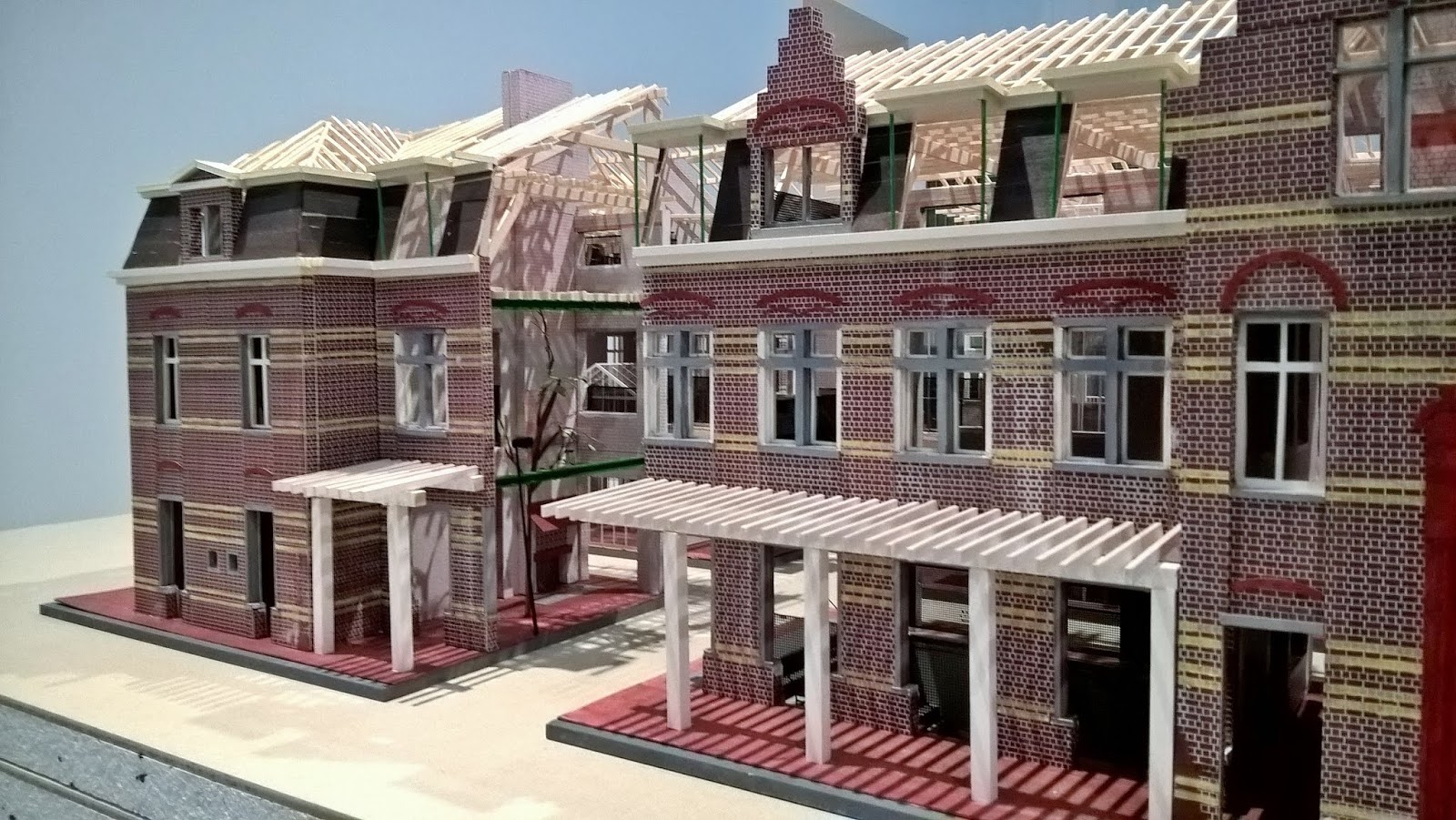
In image above: Caritas Jozef Karus ".. Somewhere between a closed building and open space, an old psychiatric hospital pavilion has been partially saved from demolition to offer a peaceful refuge for patients, their families, and people walking in the public park surrounding it. .."Melle, Belgium, 2016, De Vylder Vinck Taillieu Architects (model scale 1:50), Lisbon Architecture Triennale - ECONOMY OF MEANS Exhibition.

How Web Summit 2019 is changing our lives eventually? Those who think of the conference as a simple corporate game changer, had the opportunity to witness Web Summit performing in all different pitches, proving that it can actually be far more than just that. As the President of the Portuguese Republic Marcelo Rebelo de Sousa fervently stated in his WS19 closing ceremony speech, Web Summit is consolidating itself as an institution in the Portuguese capital and is certainly not afraid of addressing every upcoming issue affecting (digital) societies without fear or passion. That is the real decisive moment regarding the event, very prominently accented this year especially. 


Web Summit is coming to be all-inclusive, creating the necessary synergies between those who used to be considered direct competitors or having confronted interests. This unexpected association, cooperation and collectivity between all possible stands, such as anti-systemic figures like E. Snowden for instance, digital establishments the likes of Google and the public sector with organisms like E.U. - consists of WS biggest achievement so far: the introduction of new environments where everybody can be potentially part of: commercially, ethically, socially and politically. 
After all, it’s not about a game of digital Thrones or Impressions/Clicks anymore but a bare necessity, a need for all parts to work collaboratively towards the same direction, also by making the necessary compromises where needed-even if the name is Amazon or Tipser, Estée Lauder group or Ere Perez, Kering or Coleção.Moda. The exploration of your own identity and of the other party standing opposite you, is a prerequisite of liaising and creating a new condition in the digital world.  


Architecture: the notion of constructing a molecule, a space, a home, a place, a town, a system – in order to live well. In view of unprecedented climate, economic and social change, Architecture is (also) being questioned, today. This is where the birth of the Economy of Means exhibition takes place inside the Maat, right at the core of Lisbon’s Architecture Triennale 2019: The Poetics of Reason, (duration of the specific exhibition until 13/1/2020).  

“Economy of Means is the DNA of good forms. Architecture consists in defining the good form of a building,  using few and carefully surveyed means that allow architects to provide meaning and intelligibility to their buildings”. 

Curator Éric Lapierre created a journey through notions, architectural models and testimonies brought to the exhibition by a vast, international group of renown architects and theoreticians of our times, revolving around the central theme of the event: the Economy of Means (see videos bellow), also by exploring the following five conceptual entities, 1. Economy of Repetition: From Typology to the City, 2. Economy of Void: The intention of Space, 3. Economy of Measures: Small is Meaningful, 4. Economy of  Material Bulilding: The Whole Earth, 5. the Economy of Procedures: Augmented Architecture. 


In pictures bellow, from top to bottom, see some of the projects models, among many other works: 

1. House 1219, Palau Solità i Plegamans, Barcelona, Harcquitectes architects (Model scale 1:20). 


2. Café de Printemps for Augures (curated by Djamel Klouche), BAP – Biennale d’architecture et de paysage d’île-de-France, Versailles, 2019. Piovenefabi architects (model scale 1:20). 


3. Frans Masereel centre, Kasterlee, Belgium, 2019, LIST (Ido Ávissar) and Hideyuki Nakayama architects (model scale 1:20). 


4. Railway sleeper house, Miyake island, Japan, 1970, Shin Takasuga architect (model scale 1:33). 


5. 05.2.38. Project VIM, 14 logements sociaux évolutifs et participatifs (council flats), Bordeaux, 2017, Atelier Provisoire architects (model scale 1:20). 


6. Thalia theater, Lisbon, Portugal, 2008, Barbas Lopes Arquitectos + Gonçalo Byrne  Arquitectos (model scale 1:100). 


7. Church in Alesund, Norway, 2009, Baukuh architects and YellowOffice landscape design (model scale 1:50).  


The Economy of Means exhibition is an insatiable, ongoing dialogue about the future of architecture, and the role of the discipline the following decades, based on presently completed architectural attempts but most importantly- aspiring a vision of what’s coming next on building and landscape design. The state of the planet and the state of human consciousness imposes the need for a different, clairvoyant approach, one which also leaves no space for (more of the same or other) mistakes. Hurry up and pay a visit to the glorious MAAT-Central Tejo annex until 13/1/2020, and all of your questions about our current state of habitat will be fascinatedly answered. 


The Best 4 All 
A4D-D4A 💙💚 

Tuesday, 19 November 2019

WEB SUMMIT 2019, the Cartography of a Global Network - Inventory of apps, startups, companies, people + more to Explore and Remember + A4D-D4A Awards!


In photo above: Bobby Healy, the founder of aviation company MANNA on his groundbreaking presentation about to stir customer services through contemporary  technologies: drones delivering your takeaway lunch order. (No it is not a scene out of a Luc Besson sci-fi movie but a fully operation-ready, air-transport system and a true revolution for many European capitals ravaged by traffic, car pollution and low-end employment on delivery services.) 

It was certainly a FinTech year in Web Summit 2019 with a number of apps, startups, companies and 3 almost entirely dedicated stages: MoneyConf, Venture and Corporate Innovation Summit – revealing the maths but also the issues on Money, currencies, finances, economies, growth (or not). No wonder since everyone is rather worried or curious about the financial remapping worldwide right now and the shift of traditional industry to new platforms for hopefully (more) sustainable wealth.  

All stages hosted cutting-edge presentations and motivated the general public to the max but we feel that the DeepTech pitch was continuously gathering the crowds NON-STOP, raised eyebrows, created spinoffs, received applauses and spread shivers to the audience, with discussions and presentations that exceeded the expectations of even the utmost tech-savvy homo-digitalis. Sigh.
We include our global list with most impressive countries, companies, startups, apps and of course people: professionals, entrepreneurs, scientists, designers, educators and public figures-for you to reach and follow in the future.  

The Countries that Stood Out  

The Spanish pavilion was a success this year (in photo bellow), with a very solid core of companies. A hub of political controversy in the past, Spain has been called the “Germany of the South “ and it’s been a while before the old Empire could strike back in the digital domain, following the example of Portugal’s emblematic position in the continent right now. A real winner-design for the Spanish stand, and a leaflet with a quick and easy presentation of startups and tools for every use and taste (fintech, analytics & AI Big Data, content, SaaS, telecommunications, travel, insurtech, edtech, drones, 3D modeling, VR-AR, cleantech, cloud, IoT, coding, cybersecurity, social media, marketing among several), the kiosk attracted many visitors and investors.  After a leading position with Italy in fashion and retail, it was about time for the country to unfold its digital portfolio as well and coordinate with the Iberian super-force, No1 Portugal in the field.


#SpainWS19 

The 2nd runner-up in the game of impressions AND inventiveness, Poland underlined its status as a very separate entity in central Europe, promoter of intelligent IT education and maker of new companies networks, selling high-end software solutions and more. The country exceeded the limits of dry computing and old-fashion IT support by far, creating compelling digital platforms, competing directly against traditional digital moguls. In the post-Brexit era, Poland could possibly substitute the to-be-greatly-missed UK ingenuity and flair in (digital) design and technology.  After their hard work and non-fanfare attitude, we are all grateful to the Poles for that.  


www.itmagination.com 
www.mysocialseller.com 

Tallinn? And WHY not? With the commemoration of its 800-year anniversary, the Estonian capital appeared in Web Summit with a mighty plan. An integral policy to market the city as an attraction for investors of every kind, offering complete services in every boosting sector: real estate, education, public health, technology, transport, business. Tallinn came with facts and figures to support the reputation of the country as a new, highly organized pole in the Baltic region for placing funds- and making something worthy out of it. 

business.tallinn.ee 

The Companies, StartUps and Apps you Would Love 

Can we hope as citizens, to witness in our lifetime the collection of our litter by a private company, that will eventually not burry them or burn them but recycle them in outer space? (After cleaning outer space of the existing remains of space waste?) In the video below a extract of the conversation between Astroscale founder Nobu Okada with journalist Jeremy Bell - one of the true WS19 highlights: 


Fülhaus is a turn-key interior design company that offers unique solutions for your short term rental interiors like Haus-in-a-Box, innovating the Haus here!  

Is there anything that Draper cannot achieve?(in photo bellow: one of the company's  lander in vivo). Probably NOT. 


AID apart from bringing together top software, robotics AI and automotive talent in order to deliver a flawless universal Autonomous Driving System -it  produced also the most catchy/fair trade canvas bag in the whole WS19 conference (in photo bellow): 


Share the way you see the world with wonderful Stroly app


Innovative School, European network of campuses that trains people to become daptable professionals for technology jobs - Wild Code School introduces a blended teaching approach we really cherish.  

AR has a new profiler: Artist. So does cryptobanking with borderless and smooth Fluency.

Piixpay empowers your crypto wallet with the ability to make payments in Euro world. 

Personalized gaming which turn reading, writing and learning about the world into so much fun, check the 2nd Winner of The WS19 PITCH, Banjo Robinson with your children or/and your students! 

Muse is an immersive meditation device that provides real-time feedback on your mental activity, heart rate, breathing and more. More than 100.000 users in the world experience the benefits of meditation by using Muse as their personal meditation assistant.

Finally an alternative solutions to meal vouchers. PerPranzo is an innovative lunch break management service for employees and professionals, completely dematerialized, fast and easy to use. 

Also feel free to check the following, ever-so-interesting: 

-BatteryPal, Poland (Hardware, IoT) 
-Avokaado, Estonia (Legal & Consultancy) 
-The Futures, UK (Advertising, Content & Marketing) 
-BaobabConnect, UK (Philanthropy & Social Good) 
-Ironhack, Portugal (Education) 
-20tree.ai, Portugal (Environmental, Cleantech) 
-Aest-Ethics, Denmark (E-commerce, Retail)

Our People’s TOP LIST + A4D-D4A Awards 

Best Journalist-Host: The ultra-talented and knowledgeable Alex Dean, FTI. 

Genius 4 All Award: A split this year between Andrew Hopkins, CEO of Exscientia and Philipp Gerbert, of Boston Consulting Group for their out-of-this-world presentations on drug design + AI and Quantum Computing challenges respectively.  

Inspiring Female Presence: Icon and scientist Dr. Constance Lehman, Professor of Radiology at Harvard Medical School & Massachusetts General Hospital.

Social figure –Public Speaker WS19: The amazing teacher and designer Rosanne Somerson (in photo bellow), President, Rhode Island School of Design. 


The E-Xpert Award: Dr. Rebecca Parsons (in photo bellow), on evolutionary architecture and governance, she re-invented the public speaker's game in WS19, regarding a subject we rarely hear about and even more rarely tend to (really) understand.  


The Fintech Unicorn Award: Deposit Solutions GmbH, because Banking can be Open indeed with ethics and moderation even in Germany.  

The Fin-Wizard Award: Simon Schmincke, partner in Creandum can explain monetary principles and current tendencies at large, without fear but with passion.  

EntrepreNovel Award WS 2019: Lightbox, the nexus between tech and traditional jewellery: diamonds made in the lab in 2 weeks for 800$ per carat. 

Entrepreneur Award WS 2019 - Generation Z: Another shared award between Bobby Healy (Manna, slide in photo bellow) and Nobu Okada (Astroscale). Obviously. 


Civil Society Award: António Campinos, President European Patent Office. When a project has being accomplished, it shows in the process and in the whole continent. Bravo EPO. 

WS 2019 Pitch Host AwardMargarida Ruela, Director of Product, AI, Feedzai at MoneyConf track for her extended knowledge of all related topics to the core throughout the different presentations.

Creative Guru + Design Hero Award: Legendary Mike McGee, co-founder & Chief Creative Officer, Framestore + the Creative Lady of UK design scene Charlie Smith, founder & Creative Director, Charlie Smith Design respectively.

Many thanks to the WS team, the Media Support, all the people working at the Venue and the City Of Lisbon for their patience, their kindness and their hospitality.  

Until next year, follow #WebSummit 

Best regards 

A4D-D4A💙💚 

NEXT: IN & OUT WEB SUMMIT 2019: Conclusions-The Ballot + Lisbon Architecture Triennale - ECONOMY OF MEANS Exhibition.